Building content from the ground up at Alibaba Group
Company: Alibaba Group (Accio & AI Mode) Role: Content Strategist (Contract) Duration: 3 months Scope: Audit · Style guide · Feature content
The Problem
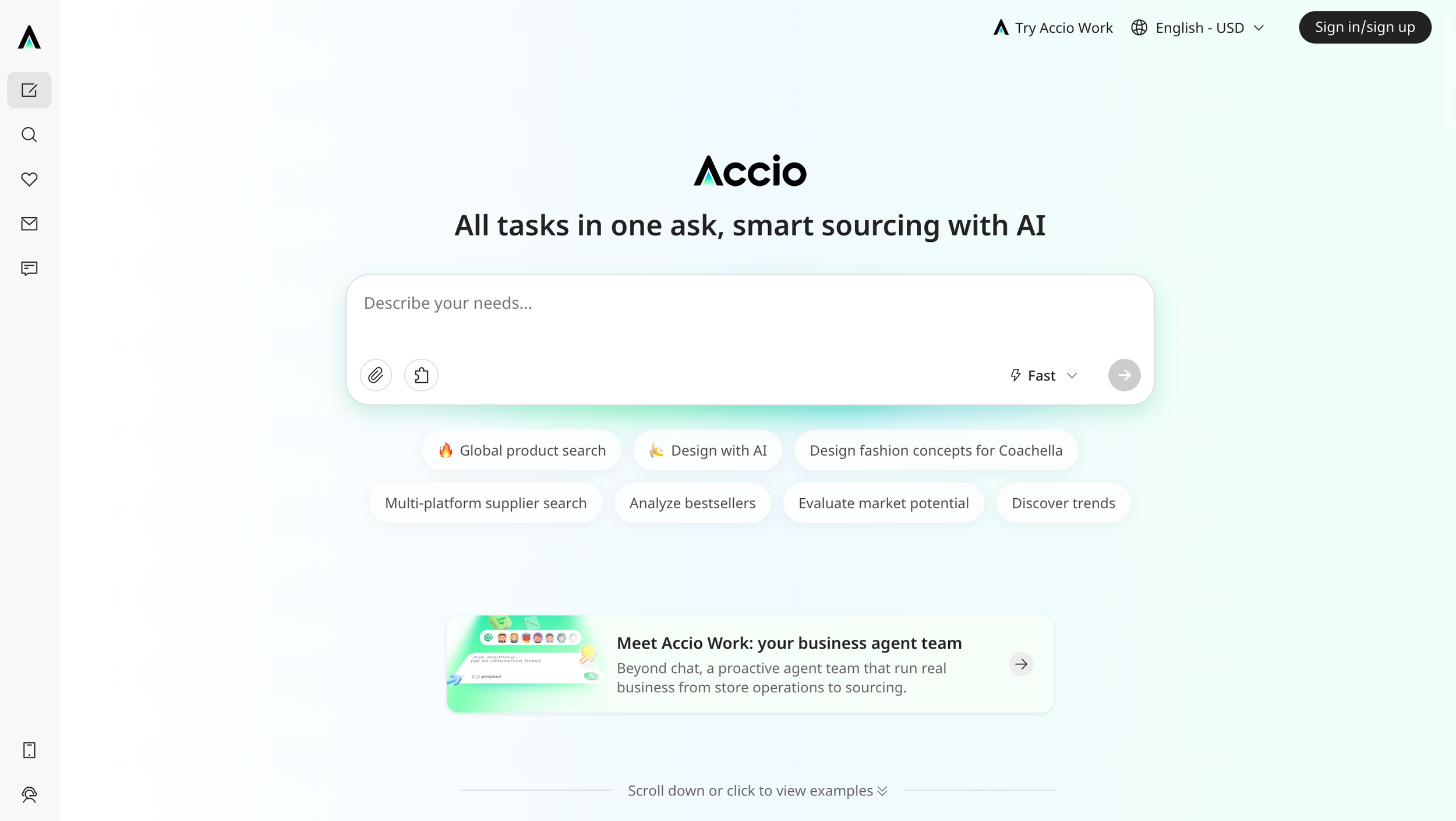
When I joined, Alibaba Group had launched its Accio platform about a year earlier. While there had previously been a dedicated content strategist for about six months, there were no existing voice and tone guidelines or agreed-upon terminology aside from the Alibaba.com guidelines. As Accio was scaling rapidly, and the functionality would soon be integrated into Alibaba.com as AI Mode, the absence of content infrastructure was becoming more necessary to correct and prevent inconsistent language across the experience while maintaining a rapid release schedule.
I was the only dedicated content resource on both Accio and AI Mode. Rather than being embedded in a single feature team, my mandate was broader: assess what existed, define what was missing, and build the content layer that would enable everything else.
My Approach
With a short timeline and no existing playbook, I started where any good content strategy has to: with the current state. I conducted a full content audit of both the Accio web and mobile experiences, documenting inconsistencies, terminology gaps, and opportunities for improvement across both content and UX design.
I compiled my audit findings into a formal report shared with the content team and senior leadership. It wasn't just a list of problems, it was a structured case for action, including:
Audit process documentation
I clearly outlined what I did and did not audit in my initial review. All of the existing navigation and interaction was audited. To expedite the process and share out findings as quickly as possible, the individual sample prompts (there were 42), prompt outputs, FAQs, and help chatbot responses were not reviewed as part of that first audit.
Key findings with screenshots
I included screenshots of each page, dropdown, tooltip, pop-up, and modal I audited along with markup and annotation mapping to my notes.
Recommendations with rationale
I identified issues I found, explained why they were issues including potential impact on user behavior, and clearly outlined changes we could make to improve the experience.
Competitive examples
When I identified gaps, I included screenshots and explanations of how competitors handled the same use cases and why a similar approach would work for our product.
Next steps for content strategy
I mapped out quick wins (small content changes that could be made immediately), midterm projects (building a style guide), and longterm projects (refining the agent persona, developing a machine-readable content design system) that would improve usability, user retention, and speed-to-launch.
From there, I built a living spreadsheet to manage all string changes across web and mobile — capturing the screenshot, existing string, updated string, and implementation status in one place. This gave the product team a clear, actionable reference they could work from on their own timeline, while giving me full visibility into what had shipped and what was still pending. I maintained the spreadsheet through bi-weekly audits of Accio, and when AI Mode launched, I extended the same governance framework to cover it as well.
UI Content
Alongside the infrastructure work, I wrote feature content for both Accio and AI Mode, producing copy, UX strings, and documentation intended to ship with new features as they were developed. During my 3-month contract, AI Mode was launched on Alibaba.com and Accio added AI auto-reply, inquiries, personalization, skills, task files, response rating, temporary product search, and 12 new sample prompts. Additionally, multiple promotions and pricing methods were tested, each requiring updates to microcopy on subscription pages and billing cards as well as changes to info on FAQ.